 English
 français
 Deutsch
 Español
 italiano
 русский
 português
 العربية
 ไทย
ไทย čeština
 Polska
Pump sealing systems are essential components in industrial equipment because they prevent fluid leakage, protect rotating shafts, and improve overall pump reliability. From water treatment and chemical processing to food production and energy industries, choosing the right sealing solution directly affects equipment performance and maintenance costs.
Among various sealing technologies, mechanical seals have become one of the most widely used solutions because they provide reliable sealing performance under high pressure, high temperature, and continuous operating conditions.
Understanding the different types of pump seals, their structures, and applications helps engineers select the right product for different working environments. As a professional mechanical seal manufacturer, Sealcon provides a wide range of mechanical sealing solutions designed for pumps, rotating equipment, and customized industrial applications.
Overview
This guide explains common pump seal types, mechanical seal structures, centrifugal mechanical seal types, water pump seal types, material selection, maintenance tips, and how to choose the right sealing solution for industrial pump applications.
What Is a Pump Seal?
A pump seal is a device installed between the rotating shaft and stationary pump housing to prevent liquid leakage during operation. Since pumps operate with rotating components, pressure differences, and fluid movement, sealing systems are necessary to maintain efficiency and prevent equipment damage.
Traditional pumps often used packing seals, but modern industries increasingly prefer mechanical seals because they offer:
Lower leakage rates
Longer service life
Better reliability
Reduced maintenance requirements
Improved environmental protection
A typical mechanical seal part includes several precision components:
| Mechanical Seal Part | Function |
| Rotating face | Moves with the pump shaft and creates the sealing surface. |
| Stationary seat | Provides a fixed sealing surface. |
| Spring | Maintains contact pressure between seal faces. |
| O-ring | Prevents secondary leakage. |
| Retainer | Holds internal components together. |
| Shaft sleeve | Protects the pump shaft. |
According to the U.S. Department of Energy Pump Systems Guide, proper selection and maintenance of pump components can improve system efficiency and reduce unnecessary operational losses.
Main Types of Pump Seals
Different operating environments require different sealing designs. The most common pump seal types include mechanical seals, cartridge seals, component seals, and oil seals.
Mechanical Seals
Mechanical seals are the most common sealing solution used in modern pumps. They work by creating a controlled sealing interface between two precision-machined faces.
Component Mechanical Seals
Component seals are assembled from individual parts, allowing users to replace specific damaged components instead of replacing the entire seal assembly.
Cartridge Mechanical Seals
Cartridge mechanical seals are pre-assembled sealing units that integrate all components into a single structure, reducing installation errors and improving alignment accuracy.
Mechanical Seals
Mechanical seals are widely used because they provide excellent leakage control, are suitable for high-speed operation, are compatible with various liquids, and can reduce maintenance frequency. Many types of mechanical seals used in pumps are available depending on pressure, temperature, fluid characteristics, and equipment design.
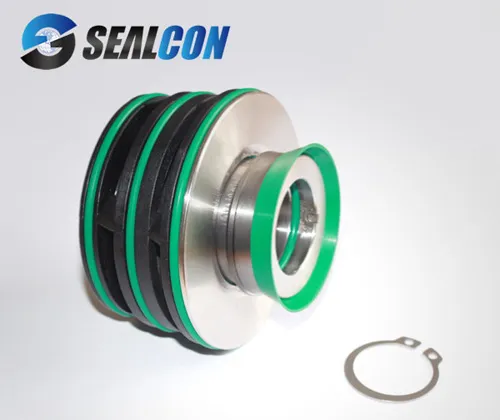
Component Mechanical Seals
A standard mechanical seal parts list usually includes seal faces, springs, O-rings, metal holders, seats, and gaskets. Component seals offer flexible replacement options, lower maintenance costs, easy availability, and compatibility with various pump models.
Cartridge Mechanical Seals
Compared with traditional component seals, cartridge seals provide easier installation, reduced assembly errors, better alignment accuracy, and improved operating safety. These seals are commonly used in large centrifugal pumps, chemical processing equipment, and heavy-duty industrial systems.
Different Types of Mechanical Seals Used in Pumps
Mechanical seals can be classified according to their design structure and operating conditions. Common designs include single mechanical seals, double mechanical seals, balanced mechanical seals, and unbalanced mechanical seals.
Single Mechanical Seal
A single mechanical seal contains one pair of sealing faces. It is one of the most widely used designs for clean fluids with moderate pressure and temperature requirements.
Double Mechanical Seal
A double mechanical seal uses two sets of sealing faces with a buffer or barrier fluid between them, making it suitable for hazardous fluids and demanding conditions.
Balanced Mechanical Seal
Balanced mechanical seals reduce hydraulic pressure acting on the seal faces, allowing them to operate under higher-pressure conditions with reduced friction and heat generation.
Unbalanced Mechanical Seal
Unbalanced seals have a simpler structure and are commonly used in lower-pressure applications, such as small water pumps and general-purpose equipment.
Single seals are commonly used in water pumps, HVAC systems, circulation pumps, and standard industrial equipment. Double seals are commonly used in chemical processing, pharmaceutical equipment, and oil and gas applications. Balanced designs are frequently used in high-pressure centrifugal pumps, while unbalanced seals are suitable for economical lower-pressure systems.
Centrifugal Mechanical Seal Types and Applications
Centrifugal pumps are widely used in industrial systems because they provide continuous fluid transfer with stable performance. However, the rotating shaft of a centrifugal pump requires an effective sealing system to prevent leakage and maintain operational efficiency.
The most common types of mechanical seal in centrifugal pump applications include single seals, double seals, cartridge seals, balanced seals, and elastomer bellows seals.
| Centrifugal Mechanical Seal Type | Features | Typical Applications |
| Single mechanical seal | Simple structure, economical, easy maintenance | Water pumps, circulation systems |
| Double mechanical seal | Provides additional leakage protection | Chemical and hazardous fluid pumps |
| Cartridge mechanical seal | Pre-assembled design, easy installation | Large centrifugal pumps |
| Balanced mechanical seal | Suitable for higher pressure operation | Heavy-duty industrial pumps |
| Elastomer bellows seal | Flexible structure and good adaptability | Clean water and light chemical applications |
Selecting the correct centrifugal mechanical seal type depends on operating parameters such as pump speed, pressure, temperature, fluid composition, and shaft size. According to API Standard 682, proper mechanical seal selection is critical for improving reliability in centrifugal and rotary pumps.
Water Pump Seal Types and Their Features
Water pumps require sealing solutions that can operate continuously while maintaining low leakage performance. Different water pump seal types are selected according to water quality, temperature, pressure, and pump design.
Ceramic-Carbon Mechanical Seals
Ceramic-carbon seals are among the most commonly used water pump seals because they provide good wear resistance and cost efficiency.
Stable performance
Suitable for clean water applications
Affordable replacement cost
They are widely used in domestic pumps, circulation pumps, and general industrial water systems.
Silicon Carbide Mechanical Seals
Silicon carbide seals provide excellent hardness and corrosion resistance. They are suitable for industrial water treatment, abrasive fluids, and chemical environments.
Compared with standard materials, silicon carbide offers better resistance to wear and chemical attack.
Rubber Bellows Seals
Rubber bellows mechanical seals provide flexibility and compensation for shaft movement.
Simple installation
Good vibration resistance
Reliable sealing performance
They are commonly found in smaller pumps and general water circulation equipment.
Mechanical Oil Seal vs Mechanical Seal
A mechanical oil seal is often used to prevent lubricant leakage from rotating equipment, while mechanical seals are mainly designed for pumps handling liquids under pressure. Although both products control fluid movement around rotating shafts, their structures and applications are different.
| Feature | Mechanical Seal | Mechanical Oil Seal |
| Main Function | Prevent process fluid leakage | Prevent oil leakage |
| Structure | Two sealing faces | Rubber sealing lip |
| Pressure Capability | Medium to high pressure | Usually low pressure |
| Common Applications | Pumps, mixers, compressors | Engines, gearboxes, motors |
Mechanical seals are preferred for pump applications because they can handle higher pressure, speed, and demanding fluid conditions.
How to Choose the Right Pump Seal Type?
With many pump seals types available, selecting the correct sealing solution requires careful evaluation of the pump design and operating environment.
Consider Pump Operating Conditions
Before choosing a seal, engineers should evaluate:
Operating temperature
Fluid pressure
Pump speed
Chemical properties
Presence of solid particles
A seal designed for clean water may not perform well in abrasive or corrosive fluids.
Select Suitable Seal Materials
Material selection has a major impact on seal performance. Common mechanical seal materials include:
| Material | Advantages |
| Carbon | Good lubrication properties and general performance. |
| Ceramic | Cost-effective and wear resistant. |
| Silicon Carbide | Excellent corrosion and abrasion resistance. |
| Tungsten Carbide | Suitable for demanding industrial applications. |
Sealcon provides customized material combinations according to different pump requirements, helping customers select suitable sealing solutions for specific operating environments.
Why Choose Sealcon Mechanical Seals?
When customers need to buy mechanical seal products, selecting an experienced manufacturer is important for ensuring product reliability and compatibility.
Sealcon specializes in manufacturing mechanical seals for various industrial applications, including water pumps, centrifugal pumps, chemical pumps, industrial equipment, and customized rotating machinery.
Comprehensive Product Range
Sealcon provides different sealing solutions, including:
Standard mechanical seals
Cartridge mechanical seals
Component mechanical seals
Replacement pump seals
Customized mechanical sealing systems
These products are designed to meet different requirements for pressure, temperature, and fluid compatibility.
Customized Mechanical Seal Solutions
Different pumps may require specific dimensions and materials. Sealcon supports customized solutions based on customer requirements.
Shaft diameter
Seal face materials
Elastomer selection
Operating conditions
Installation requirements
This flexibility helps customers achieve better sealing performance and reduce maintenance costs.
Maintenance Tips for Mechanical Pump Seals
Proper maintenance can significantly extend the service life of mechanical seals.
Avoid Dry Running
Mechanical seals require lubrication from the pumped fluid or barrier fluid. Operating without sufficient lubrication can quickly damage sealing faces.
Monitor Leakage and Vibration
Regular inspections should check excessive leakage, abnormal vibration, unusual operating temperatures, and seal face damage.
Replace Damaged Parts
When individual components such as O-rings, springs, or seal faces become worn, replacing damaged parts can restore sealing performance.
The Hydraulic Institute emphasizes that proper pump maintenance and operating practices help improve equipment reliability and energy efficiency.
Need the Right Pump Mechanical Seal?
If you are looking for mechanical seals, cartridge seals, component seals, water pump seals, centrifugal pump seals, or customized pump sealing solutions, Sealcon can recommend suitable products based on your pump model, shaft size, fluid type, pressure, temperature, and operating conditions.
Contact Sealcon to discuss your mechanical seal requirements, material selection, replacement seal options, and customized sealing solutions.
Contact SealconFAQs
1. What are the different types of pump seals?
The main different types of pump seals include mechanical seals, cartridge seals, component seals, single mechanical seals, double mechanical seals, balanced seals, and unbalanced seals.
2. What are the most common water pump seal types?
The most common water pump seal types include ceramic-carbon mechanical seals, silicon carbide seals, and rubber bellows seals.
3. What types of mechanical seals are used in pumps?
The common types of mechanical seals used in pumps include single mechanical seals, double mechanical seals, cartridge seals, balanced seals, and elastomer bellows seals.
4. How do I choose the correct pump seal?
The correct pump seal depends on pump design, fluid characteristics, pressure, temperature, speed, and material compatibility.
5. Where can I buy mechanical seal products?
Industrial buyers can purchase mechanical seals from professional manufacturers such as Sealcon, which provides standard and customized mechanical sealing solutions.
Related Blog
The Difference Between Mixing Machine Mechanical Seal And Pump Mechanical Seal
Seven kinds Of Knowledge About the Chemical Pump
Misunderstandings Of Maintenance Of Flygt Pump Seals